
Advertising has reached peak self-delusion
The most important question isn’t why the industry produces flattering headlines. It’s why senior practitioners keep accepting them.

If the UK’s online advertising can’t police itself, who will?
A dissection of IAB Sweden's decision to expel Meta — and IAB UK's decision to give it a Gold Standard — that reframes the story not as a geography lesson, but as a warning about what happens when trade bodies become structurally incapable of holding their most powerful members to account.

How serious is Google really about its TV future?
An analysis of YouTube's "new TV" strategy that reframes the whole debate — arguing that Alphabet's ambiguity about whether YouTube is a broadcaster or a platform isn't confusion, it's deliberate regulatory camouflage designed to protect a second monopoly before anyone notices it exists.

A year in review for media agencies… without the rankings and self-deception
A clear-eyed review of media agencies’ year that strips away league tables and hype, focusing instead on structural pressures, strategic mistakes, and the uncomfortable truths rankings are designed to obscure.
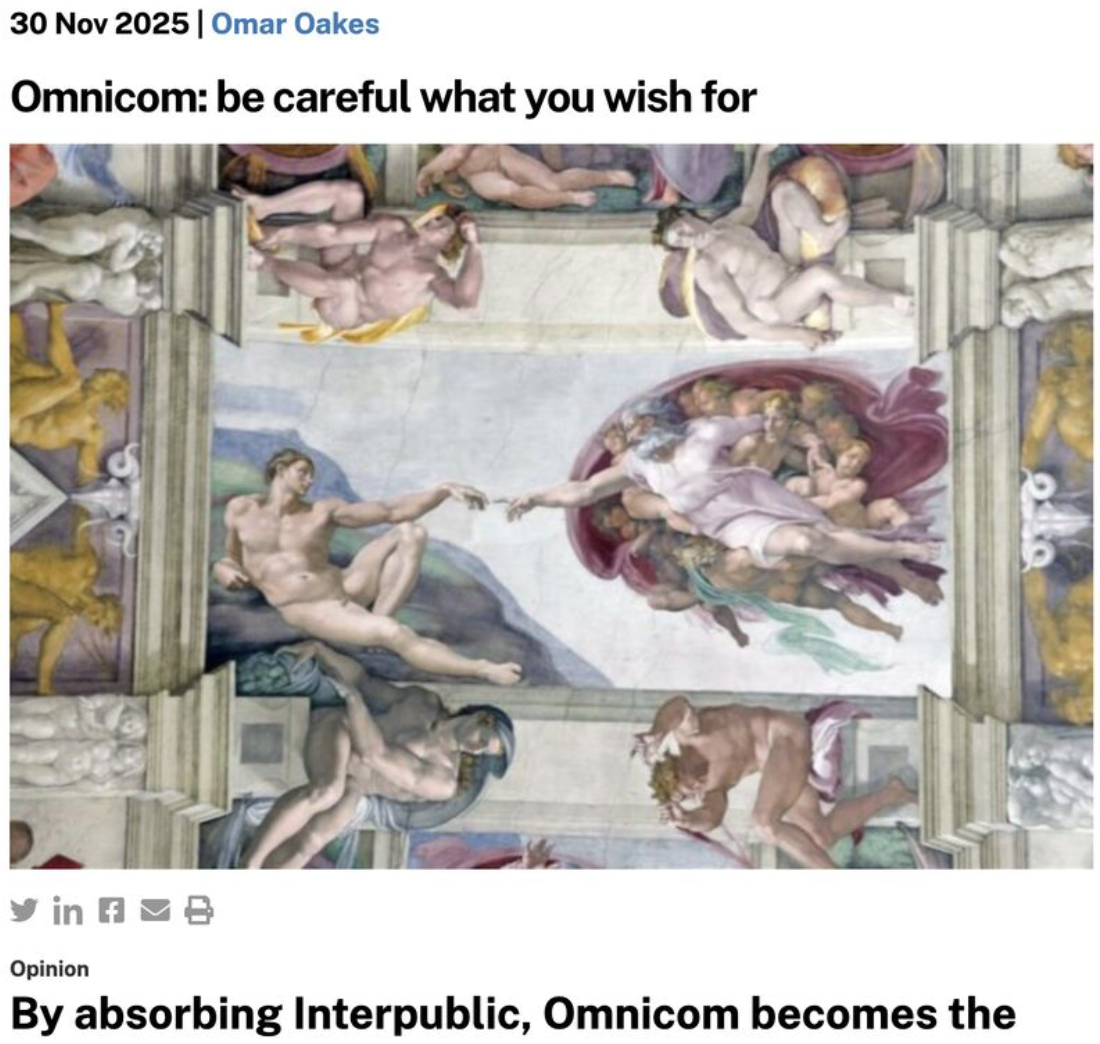
Omnicom: be careful what you wish for
A critique of Omnicom’s ambitions that interrogates scale, integration, and investor logic—asking whether what looks like strategic progress may actually deepen the industry’s most persistent structural problems.

At last! Disney embraces creators — now who else has the courage to follow?
A commentary on Disney’s creator strategy that treats the move less as a partnership announcement and more as a cultural signal—raising harder questions about who controls distribution, legitimacy, and risk in the new media economy.

Stop blaming planners. It’s their clients who make media ineffective
A challenge to the industry’s favourite scapegoat, arguing that media inefficiency is driven less by planning failure than by client incentives, procurement pressure, and decision-making structures no planner can override.

Why parasitic platforms keep feeding on media
An examination of how dominant platforms extract value from media ecosystems, why publishers struggle to resist, and what the next phase of this parasitic relationship is likely to look like as power further concentrates.